
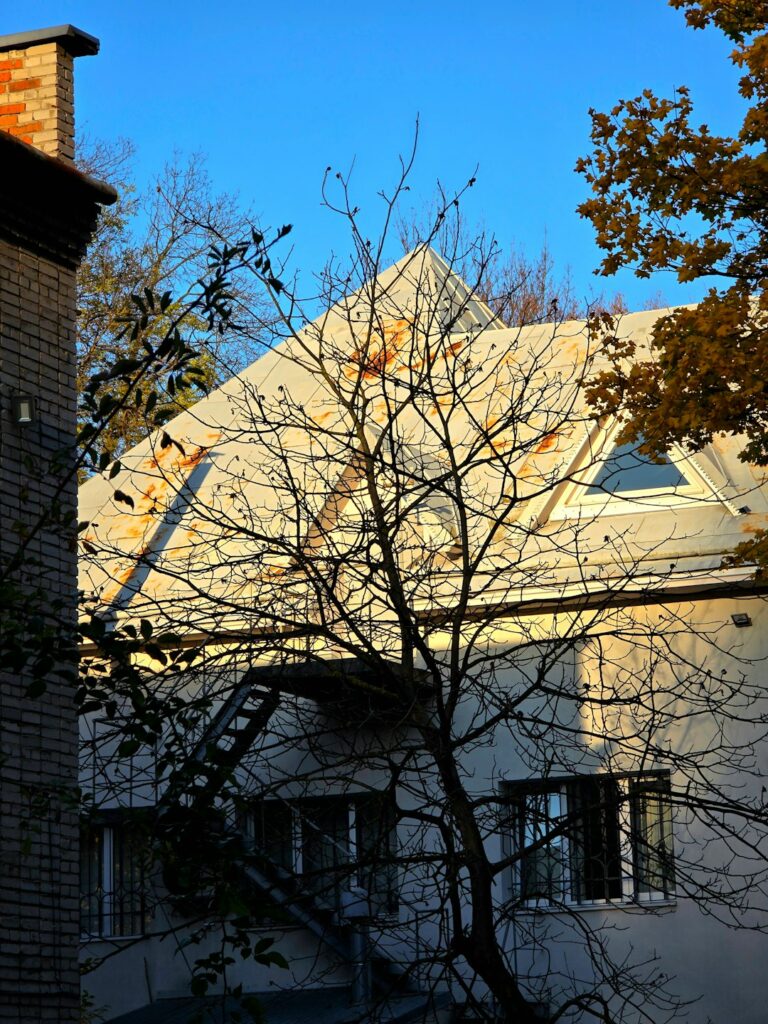
Why tree limbs pose a risk to roofs
Tree limbs can damage a roof in several ways, even when no branch falls directly onto the house. Contact with shingles, repeated movement in the wind, falling twigs, trapped moisture, and blocked drainage can all shorten the life of roofing materials.
In Youngstown, NY, homes may face a combination of strong seasonal winds, heavy snow, ice, rain, and freeze-thaw cycles. Trees near a roof can add another source of wear, especially when branches extend over roof slopes, dormers, chimneys, gutters, or attached garages.
A limb does not have to be large to create a problem. Smaller branches can scrape away protective granules from asphalt shingles, puncture exposed flashing, or collect in valleys where water already tends to move slowly.
Can tree branches damage shingles without falling?
Yes. Branches that repeatedly rub against shingles can cause gradual surface damage. Wind pushes the limb back and forth, creating friction that may loosen granules, lift shingle edges, or wear through the protective surface.
This type of damage may be difficult to notice from the ground. Warning signs include:
- Bare or unusually smooth patches on shingles
- Shingle edges that appear curled, lifted, or torn
- Small piles of roofing granules in gutters
- Dark streaks or exposed fiberglass matting
- Scraped areas near the edge of a roof or below an overhanging branch
A branch may also scratch metal flashing around a chimney, skylight, vent, or roof-to-wall connection. Once flashing is bent or damaged, water can enter areas that are not directly beneath the tree.
What happens when a limb falls on a roof?
A falling limb can cause immediate structural and weatherproofing damage. The result depends on the branch’s size, speed, shape, and the part of the roof it strikes.
Possible damage includes:
- Broken or displaced shingles
- Cracked roof decking
- Bent flashing
- Damaged vents or pipe collars
- Dented gutters and downspouts
- Broken rafters or roof framing
- Ceiling stains or active leaks
Large branches can create a depression in the roof surface even when shingles do not appear badly damaged. That depression may allow water to collect and may not be visible from inside the attic right away.
After a significant impact, avoid walking on the roof or climbing onto it to inspect the area. Wet shingles, unstable branches, and hidden structural damage can make roof access dangerous. If water is entering the home, place a container beneath the leak and move furnishings or electronics away from the area when possible.
How do branches affect gutters and drainage?
Tree limbs contribute to roof problems by filling gutters with leaves, twigs, bark, and seed debris. When gutters become blocked, rainwater can overflow against fascia boards, siding, windows, or foundation areas.
On a roof with valleys, debris may also collect where two slopes meet. A pile of leaves or small branches can hold moisture against shingles and encourage decay, algae growth, or premature material breakdown.
Blocked drainage is especially troublesome during freeze-thaw weather. Water trapped in gutters or roof debris can freeze, expand, and create additional stress on seams, edges, and drainage components. Ice may also increase the weight carried by already weakened gutters.
Regularly checking roof valleys, gutters, and downspout outlets is useful after major storms and during autumn leaf fall. Any debris that can be reached safely from the ground should still be handled carefully; using ladders near wet surfaces, ice, power lines, or unstable branches creates a serious fall risk.
Can tree roots or movement affect the roof?
Tree roots do not usually damage a roof directly, but tree movement can affect nearby structures. A tree with unstable soil, damaged roots, or a leaning trunk may place branches under unusual tension. During high winds, those branches can swing farther than expected or break unexpectedly.
Trees growing close to a house may also have limbs that rest against the roof during wet or snowy conditions. Added weight from snow and ice can lower branches onto shingles, gutters, or vents. In some cases, a limb that clears the roof during summer may press against it after foliage becomes heavy or winter precipitation accumulates.
Trees should be observed for signs of increased risk, such as:
- Dead branches or sections without leaves
- Cracks where a limb joins the trunk
- Mushrooms or decay near the base
- A newly leaning trunk
- Loose bark or visible cavities
- Branches hanging over frequently used entrances
- Limbs resting on utility lines or roof surfaces
A branch near a power line, a large broken limb suspended above the roof, or a severely damaged tree should not be handled as a routine yard-cleanup task. These conditions may require specialized equipment and controlled removal for safety.
What roof areas are most vulnerable?
Roof edges, valleys, and roof penetrations are often more vulnerable than broad, open sections of shingles. A falling or rubbing branch can damage the following areas:
Eaves and rakes: These edges are exposed to wind and may have less structural protection than the central roof surface.
Valleys: Debris naturally gathers in valleys, where it can block water flow and keep shingles damp.

Chimneys and vents: Flashing and rubber or metal collars can be bent or torn by impact.
Skylights: Branches may crack the surrounding frame or damage the glass or protective covering.
Gutters: Even a small limb can pull a gutter away from the fascia if it catches during a storm.
Dormers and roof-to-wall joints: These transitions contain multiple seams where water can enter if flashing shifts.
Inspecting these areas from the attic can sometimes reveal daylight, damp wood, staining, or damaged insulation. However, a dry attic does not prove that the roof is undamaged. Some leaks appear only during wind-driven rain or after snow melts.
What should homeowners check after a storm?
After high winds, heavy snow, or ice, look for roof-related warning signs from the ground and from inside the home. Binoculars can help with a visual check without requiring roof access.
Look for:
- Fresh branches or bark on the roof
- Shingles that look out of alignment
- Missing pieces near tree overhangs
- New gutter dents or separation
- Water stains on ceilings or upper walls
- Damp insulation or dark roof decking in the attic
- Unusual light visible through the roof deck
- New drafts around attic openings
Do not assume a roof is safe simply because there is no ceiling stain. Water can travel along rafters or decking before appearing inside, and minor punctures may remain dry until the next heavy rain.
If a limb has struck the roof, the safest response is to keep people away from the affected area, avoid disturbing the branch, and arrange a qualified inspection when structural damage or an active leak is possible. Emergency conditions involving power lines, unstable trees, or blocked exits should be treated as hazards rather than ordinary roof maintenance.
How can tree-related roof damage be reduced?
The most effective prevention is maintaining reasonable clearance between mature branches and the roof. Trees do not need to be removed simply because they are near a home, but dead, weak, or rubbing limbs deserve attention.
Helpful practices include:
- Watch for branches that touch shingles, gutters, chimneys, or siding.
- Remove dead limbs before seasonal storms whenever conditions are safe.
- Keep roof valleys and gutters clear of accumulated debris.
- Observe trees after ice storms and heavy snowfall.
- Avoid storing ladders or tools beneath unstable branches.
- Keep an attic inspection in the seasonal maintenance routine.
- Document existing roof and tree conditions with dated photographs.
A useful rule is to treat any branch that is rubbing, hanging over a roof edge, visibly decayed, or connected to a damaged tree as a potential maintenance concern. Early attention is generally easier than dealing with water intrusion, damaged framing, or a blocked emergency exit after a storm.
